How to choose an agency for your next product: what to ask, what to check, what to avoid
Picking a design and development partner is one of the biggest bets an early-stage team makes. A practical guide to shortlisting, the questions that reveal the most, and the warning signs to take seriously.

October 23, 2026 · 4 min read

For an early-stage company, hiring an agency is rarely a small decision. It often means a large share of the budget, months of runway, and the first version of the product your customers will judge you on. Choosing well saves all three. Choosing badly can cost more than the invoice.
We are an agency, so read this with that in mind. But most of what follows applies whoever you hire, and some of it is about when not to hire an agency at all.
First, be clear on what you need
Before you look at a single portfolio, write down answers to these. A good agency will ask them anyway, and you will compare proposals far more easily:
- The outcome. “A launch-ready MVP for our pilot in March” is useful. “An app” is not.
- Design, build, or both. Some studios only design, some only build, some do both with one team.
- Budget range. Even a rough range saves weeks. Without one, you will get proposals for three different projects.
- Deadline, and why. A funding round, a pilot or a conference is a real constraint. A date picked at random is not.
- Who decides on your side, and how much time they can give each week.
Where to find a shortlist
Referrals from founders who have shipped something recently are still the best source. Portfolio platforms like Dribbble and Contra, review sites like Clutch, and the credits on products you admire are good second options. Aim for three to five serious candidates. More than that and the comparison gets shallow.
How to read a portfolio
Polished shots are easy to make. Look past them:
- Is it live? Ask for links to products you can use. Concepts and redesigns of famous apps show taste, not delivery.
- Is it close to your problem? Fintech, healthcare and marketplaces each have their own constraints. Relevant experience shortens the learning curve.
- Do the case studies explain decisions? Look for the problem, the trade-offs and what happened after launch, not just the final screens.
- Were they responsible for the whole thing? “We designed the onboarding” and “we designed and built the product” are very different claims.
Questions worth asking on the first call
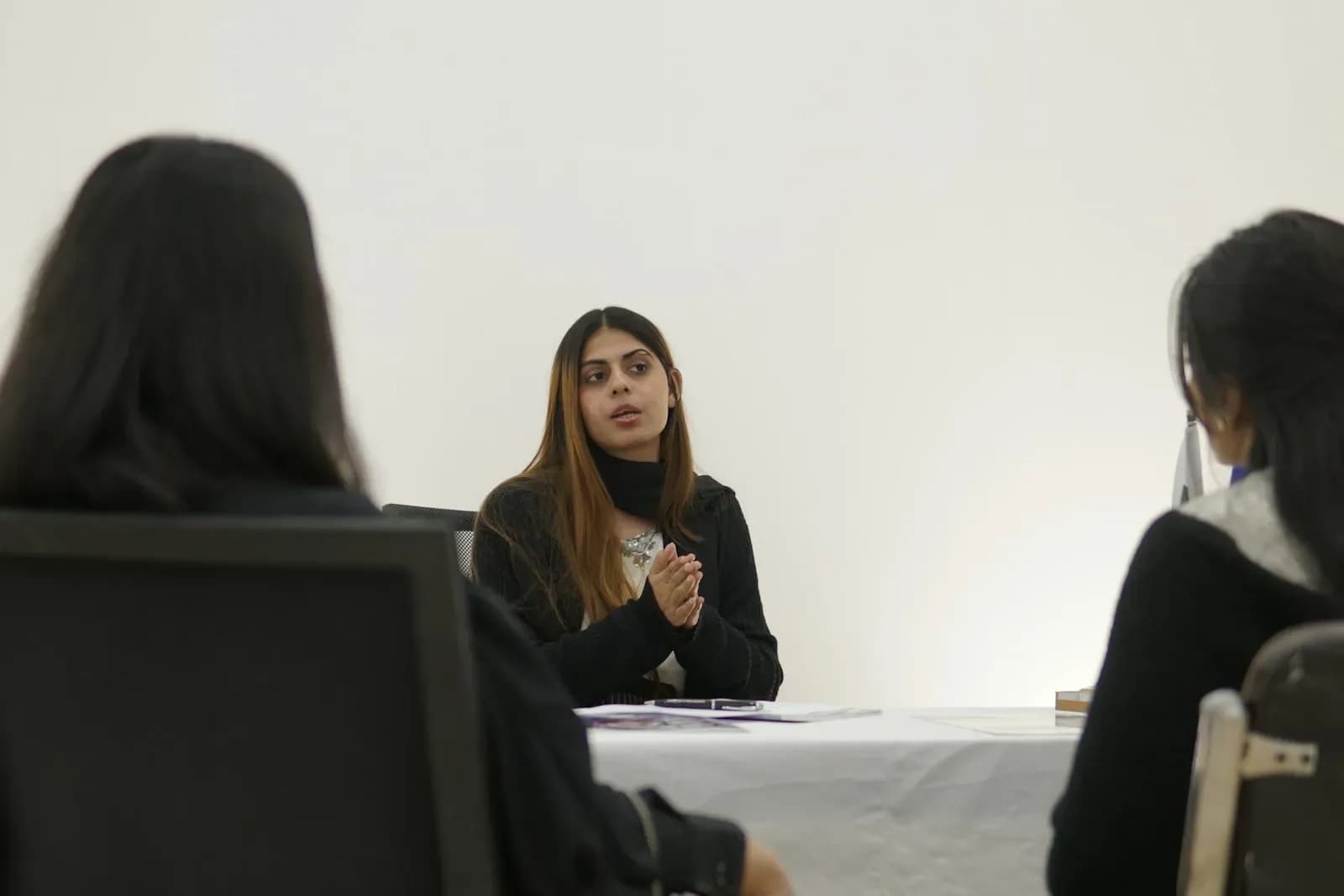
- Who exactly will work on our project, and can we meet them?
- What would you cut from our scope to hit the date?
- How do you handle changes once the work has started?
- How often will we see progress, and in what form?
- What do we own at the end: design files, code, accounts, documentation?
- Can we talk to a past client whose project went less smoothly than planned?
The second question is the most revealing. A partner who pushes back on scope is thinking about your launch. One who agrees to everything is thinking about the sale.
Red flags
- A fixed price before they understand the problem. A quote after a 15-minute call is a guess.
- No questions about your users. If they only ask about features and screens, expect a product built for you rather than for them.
- The senior people disappear after signing. Ask who does the day-to-day work.
- Vague ownership terms. You should own the code, the design files and every account, from day one.
- No way to see work in progress. Weekly demos or a shared staging link should be normal.
- Pressure to sign quickly. A good partner would rather start a week later than start on the wrong foot.

Comparing proposals
Put the proposals side by side and check the same things in each:
- What is included and, just as important, what is explicitly left out.
- How the timeline is broken down, and where the review points are.
- How changes are priced.
- What happens after launch: bug fixes, support, a retainer, or nothing.
- Payment terms tied to milestones rather than to dates alone.
Start small if you can
If you are unsure, start with a short, paid piece of work: a discovery sprint, a clickable prototype or a design audit. It costs a fraction of the full project and shows you how a partner thinks, communicates and handles feedback, which no sales call can.
The best predictor of how a project will go is how the first two weeks went.
When an agency is not the right choice
If the product is the company and you have the runway, building an in-house team early may serve you better in the long run. If you only need a few screens or a landing page, a freelancer is often enough. An agency is the right fit when you need a complete, experienced team for a defined stretch of work, without the time and cost of hiring one.
Know the outcome you want, look for evidence of delivery rather than polish, ask the questions that reveal how a partner thinks, and start with something small. Whoever you choose, you should finish the project owning everything and understanding why every decision was made.